

One Dish, Three Plates - Which Would You Choose?
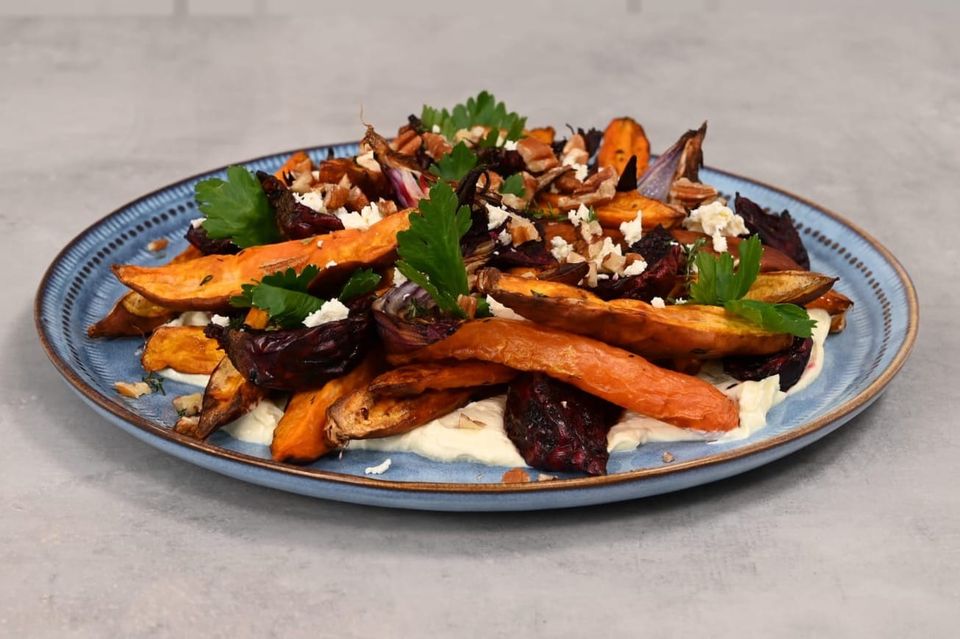
Have you ever served a dish you were happy with, only to wonder whether it might have looked better on a different plate?
The colour of your plate can make a surprising difference to how your food looks. It can highlight certain colours, create contrast, or give a dish a completely different feel - even when the food itself stays exactly the same.
Have a look at these three versions of the same roasted vegetable dish. The ingredients haven't changed at all, but the overall look certainly has!
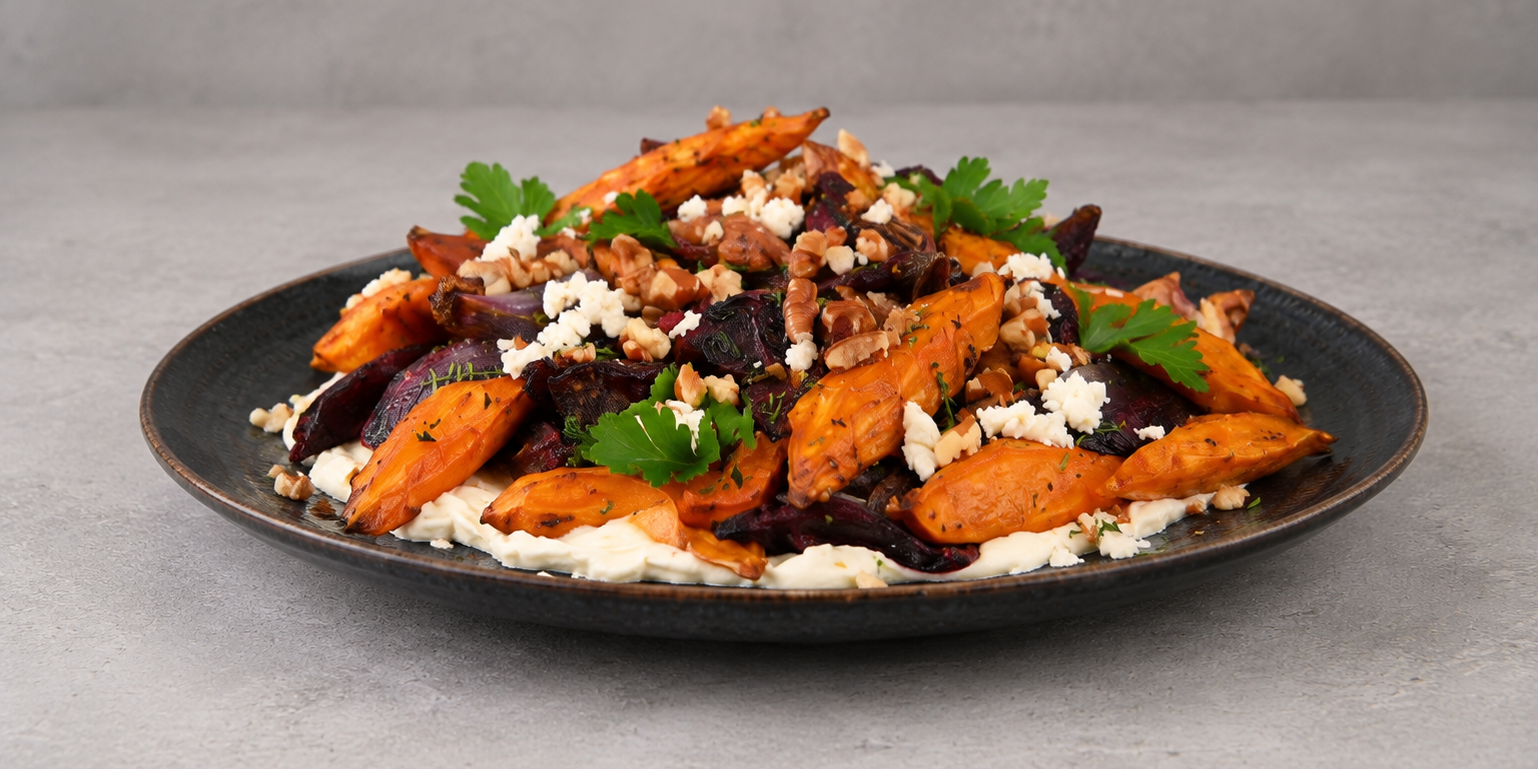
The Dark Plate - Bold and Dramatic
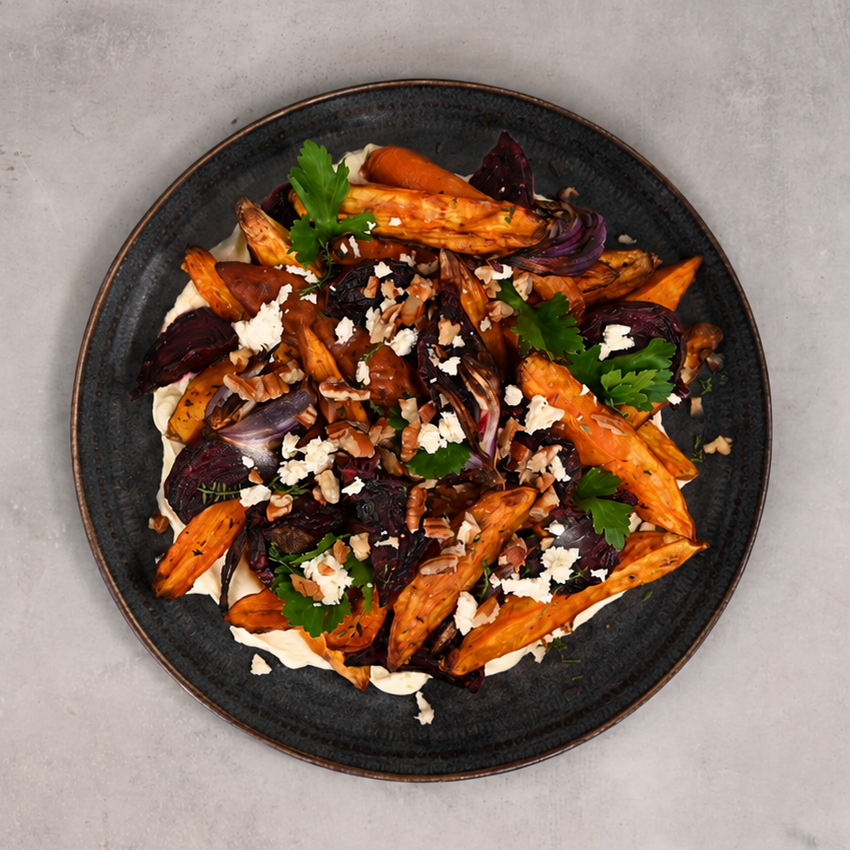
The dark plate creates a strong, dramatic look. The orange sweet potato and carrot stand out beautifully against the dark background. The white feta cheese looks really vibrant, giving the dish a lot of impact.
The advantage: Dark plates can make bright ingredients and lighter elements stand out, creating a striking presentation.
Something to consider: Dark ingredients, like the beetroot and red onion, blend into the plate more easily. If too much of the food is dark, some of its detail can disappear.
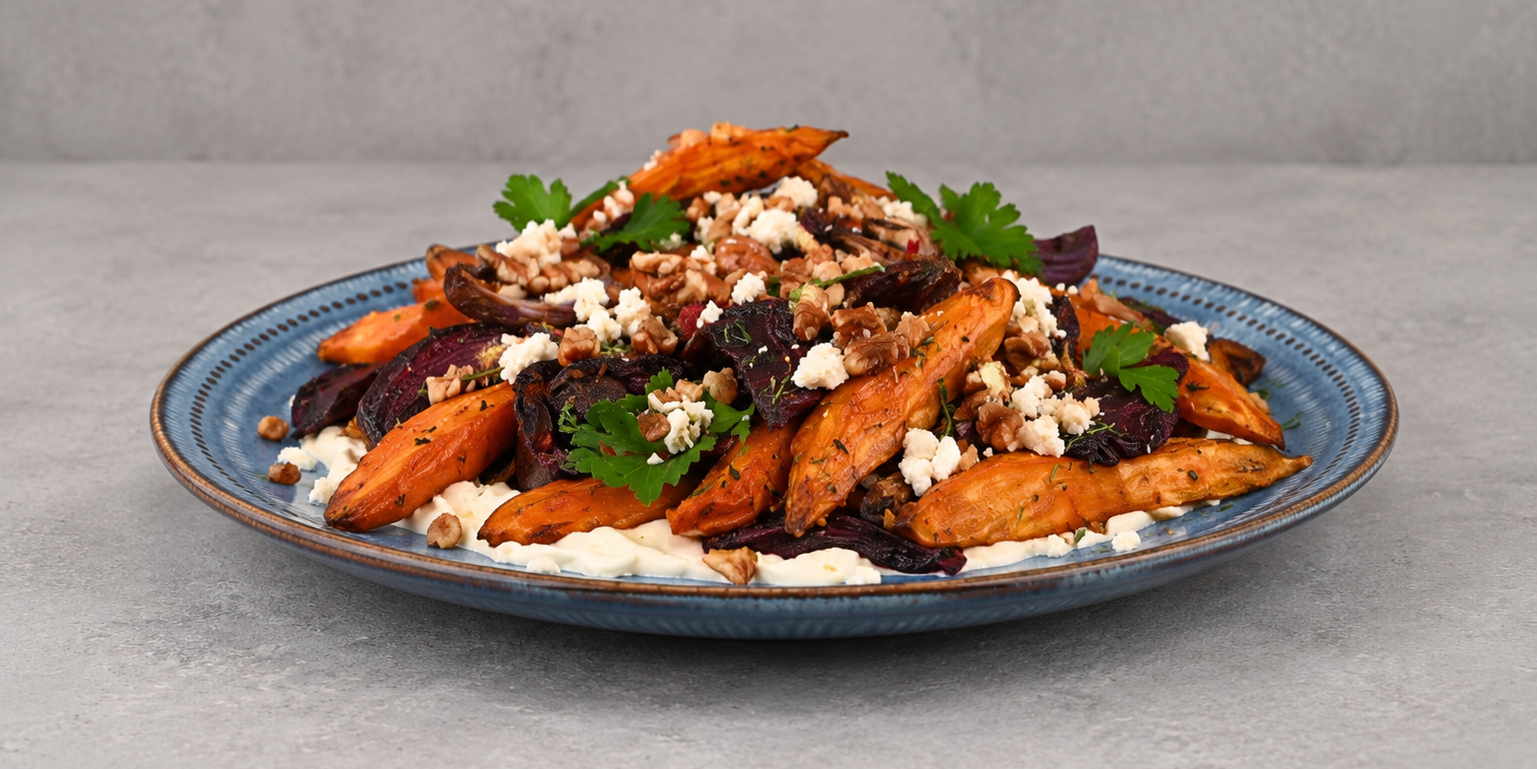
The Blue Plate - Creates Colour and Contrast
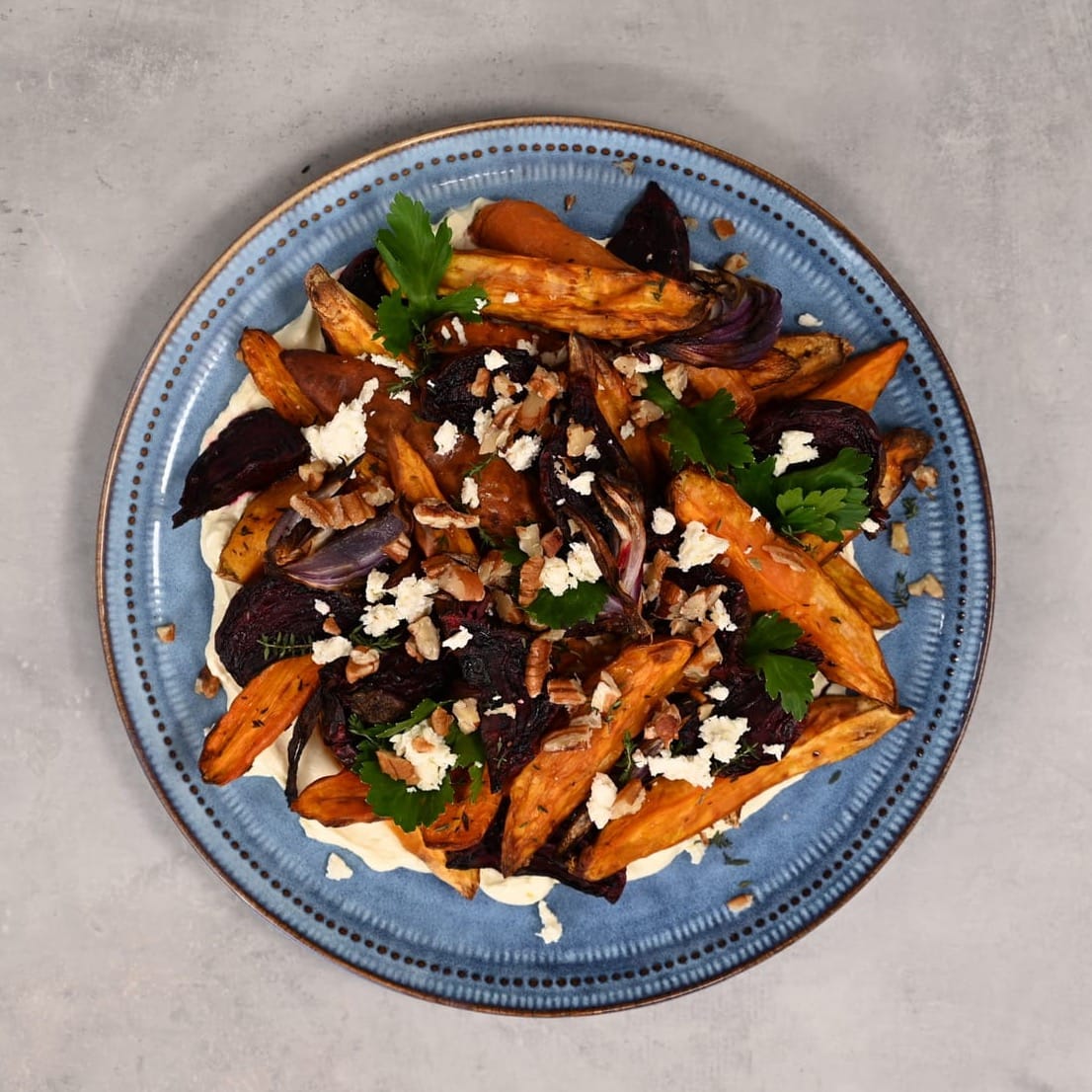
The blue plate creates a lovely contrast with the warm orange of the roasted carrot, and sweet potato, and with the deep purple of the beetroot. It also makes the white feta cheese and creamy base stand out.
The advantage: Blue plates can be a wonderful choice for foods with warm colours, helping oranges, reds and yellows to really pop.
Something to consider: Blue plates can compete with foods that already have strong cool colours, so it won't necessarily suit every dish.
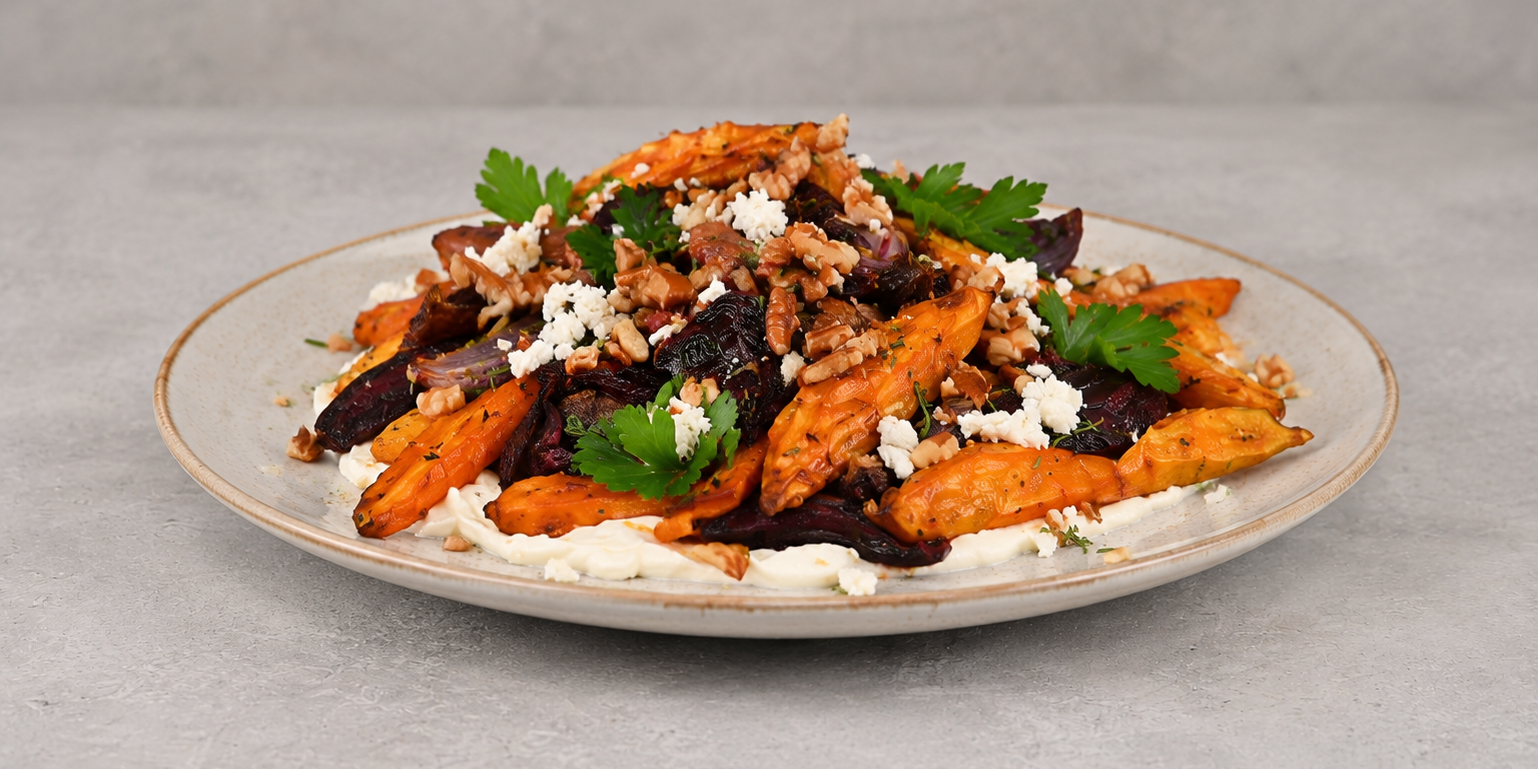
The Neutral Plate - Calm and Natural
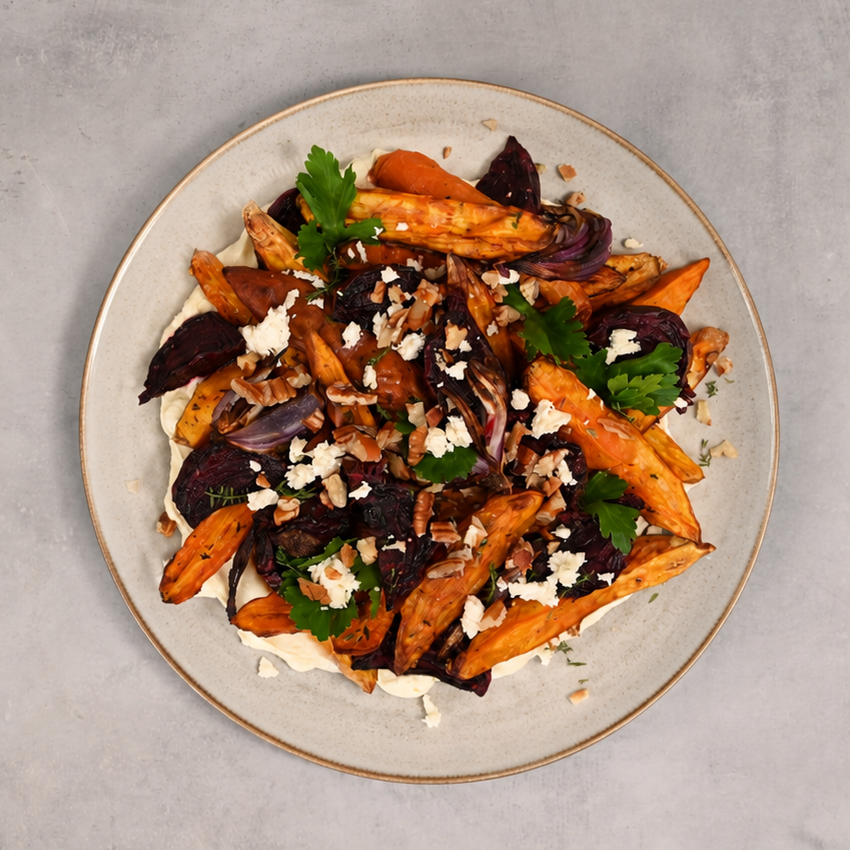
The neutral plate gives the dish a softer, more understated look. It doesn't draw much attention to the plate, allowing the roasted vegetables, fresh herbs and creamy base to take centre stage.
The advantage: Neutral colours are versatile and work with a wide range of ingredients. They're a great option when you want the food itself to be the main focus.
Something to consider: If your food is pale or lacks colour contrast, a neutral plate can sometimes make the whole dish look a little flat. You may need to introduce colour through the ingredients or a garnish.
Which Plate Is Best?
Honestly, I don't think there's a clean winner here. Each plate brings out something different in the same dish. The blue creates colourful contrast, the neutral plate gives a softer, natural look, and the dark plate adds drama.
When you're choosing a plate, remember to think about the colours in your food, which component you want to stand out, and how much contrast you want to create.
Next time, before you put the food on the plate, hold a couple of different options beside the food. You might be surprised by how much the presentation changes without changing a single ingredient. Remember, you don't need a cupboard full of expensive crockery. A few carefully chosen plate colours can give you plenty of options.
Happy plating,
Taryn
EasyPeasy.co
www.easypeasy.co